

I love coming of age stories such as the immaculately crafted Dazzling by Chikodili Emelumadu. This novel is a magical realist fantasy Bildungsroman that is inspired by Igbo, Nigerian, folklore.
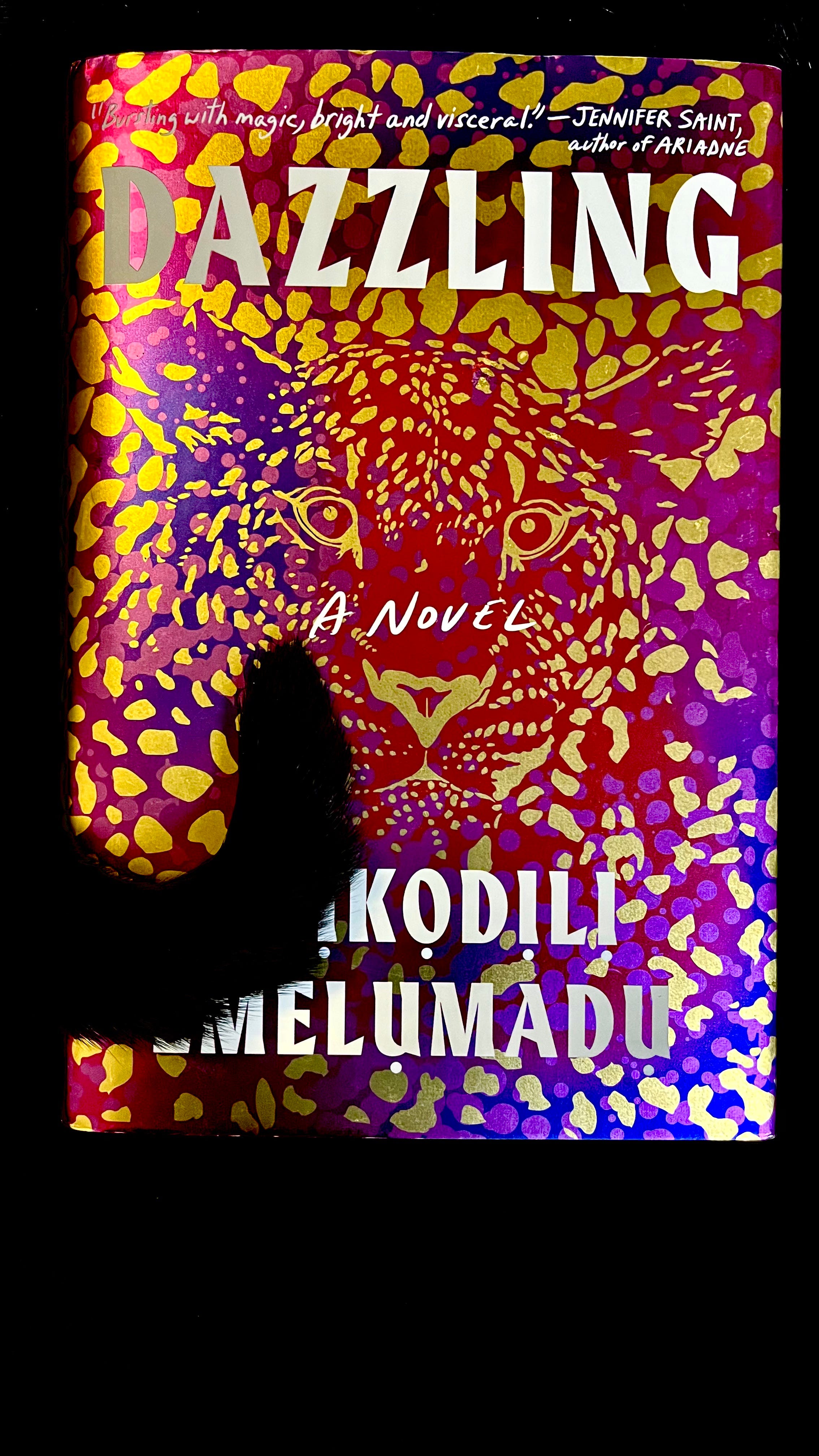
In this story about shape shifting leopards and spirits who want to be reborn through kidnapped young women, this novel explores the growing pains of girlhood and the struggle of young girls trying make sense of their budding womanhood: the burden that is school, puberty, family drama and meddling spirits. These are only some of the challenges the two protagonists have to deal with as they each to try to not only save their lives, but also uncover a mystery about their school.
As a fantasy lover and magical realism enthusiast, I appreciated the references to spirits and entities common in Igbo folklore. The Leopard Society is a recurring theme in novels written by Igbo authors, especially renown African fantasy authors such as Nnedi Okorafor. The Leopard Society was akin to a secret society/ fraternity that preserved cultural traditions, laws and customs among Igbo communities. The name Leopard comes from the presence of the animals’ skin and motif being prevalent in dances and rituals. This secret society, also known by other names such as Anyoto and Ekpe, served a multifaceted function of bridging the political, social and spiritual aspects of Igbo society. The Leopard Society is allegedly still active today albeit practiced discreetly to avoid persecution in a predominantly Christian culture.
The protagonists name Ozoemena translates to “may it never happen again”, lending a poignant emphasis on the major themes of grief, forgiveness and restitution present in this story.
Throughout the novel, Ozoemena is concerned about finding her tether: someone she can confide in about her powers and whom she can trust to bring her back when she’s lost in the spirit world. Her tether is someone who can aid her with her responsibility as the Leopard of the new generation. The previous inheritors of the Leopard had always been men who needed tethers. Ozoemena, however, as the first female Leopard, steps into her power by recognizing that she doesn’t need a tether. The novelty of her womanhood, which under typical circumstances would have been the main barrier to even being considered a candidate for the Leopard’s power, affirmed her own power and worth to wield it. This not to say that she didn’t need her community, but that her power was anchored to her sense of self: she had been looking externally for someone - her grandmother, her father, her sister, her friends - to guide her, tell her what to do and explain what her new powers meant, only to realize she had had all the answers within herself. That’s the hallmark of a great bildungsroman. It’s also a commentary on taking personal responsibility amidst societal expectations, and how disruptive going against the norm can be.
I appreciate when authors explore relatively discreet elements of their culture within their novels, and the way Emelumadu uses this important cultural artefact to display a young woman’s coming of age story is beautifully executed. It raises questions about who inherits cultural knowledge, who has the right o inherit power and who assigns worth to those deemed qualified for power. Like most African secret societies, The Leopard Society is run by a council of men who decide who can obtain and inherit the power of the Leopard. In this story, the one to inherit this power is a young woman, which starts a course of debate and conflict within the story as the expectation of a masculine Leopard gets disrupted.
Ozoemena’s journey is contrasted by Treasure’s story. Treasure suffers a great loss that upends her life overnight. She and her mother transition from a life of privilege to poverty following the death of her father. Her story is one of loss and the vulnerability that accompanies it. Her grief draws the attention of a spirit who compels her to strike a dangerous bargain that draws in others, specifically young girls and other spirits. Spirits who want to bypass the reincarnation cycle by joining the living through virginal girls. These spirits function as a dark allegory older, malicious men who consume and prey on the innocence of young African to relive their glory days. It is a point that is driven home without gratuitous sexual violence towards minors.
When Ozoemena and Treasure meet, the story takes on a quick pace where the story is elevated from an adolescent strife to an arena of powerful elemental spirits battling over souls.
The story is rife with beautiful imagery and poignant commentary on how girls are influenced by the physical, emotional and spiritual changes they experience. It is also a story of sacrifice, agency and power.
The kind of book my teenage self would have devoured over night under the covers.