

Originally written & published in 2020
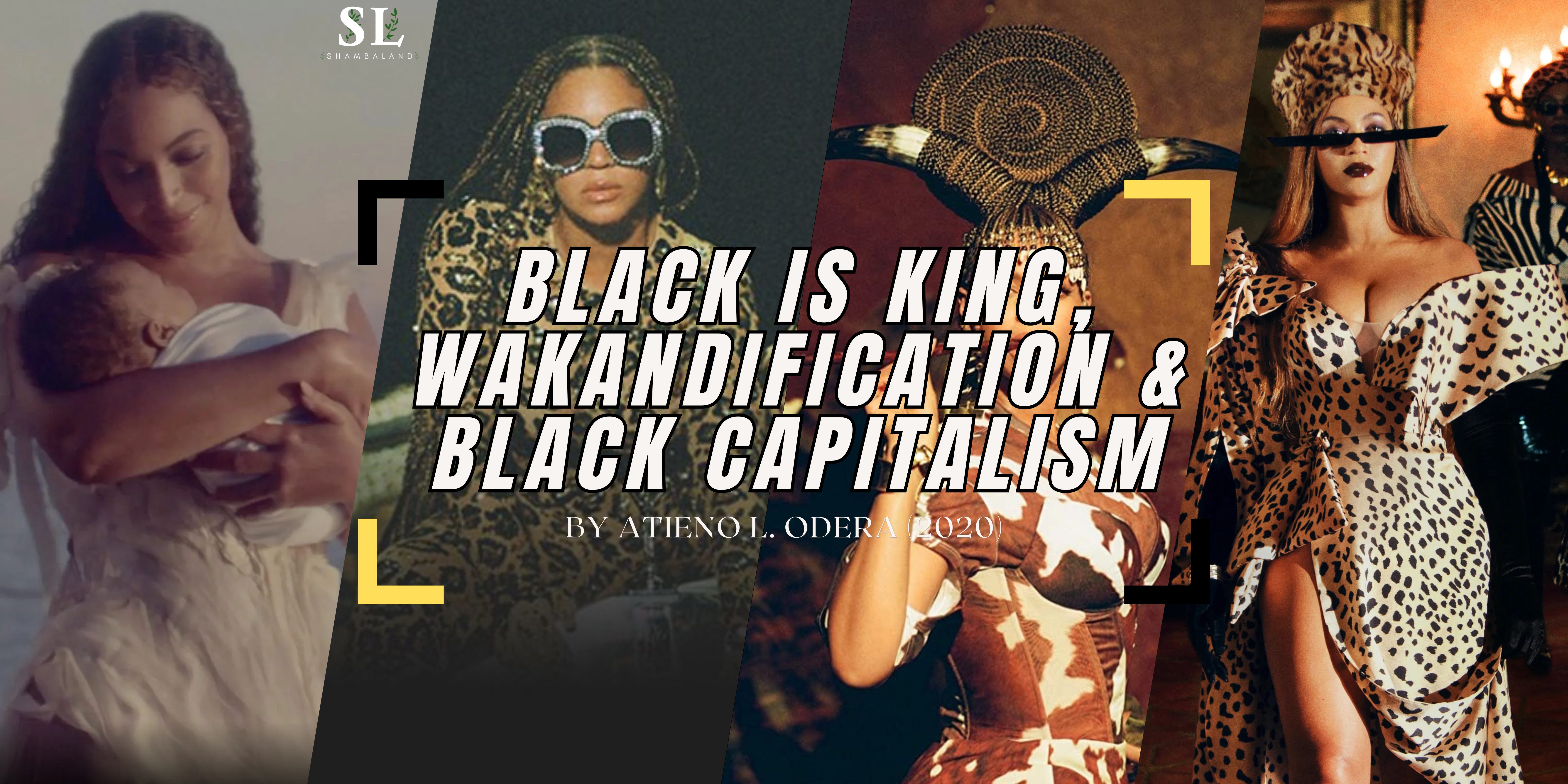
Black is King appropriates the stereotypical images of Africanness and transforms them into consumable commodities. From the cultural adornments and customs to the diverse ecosystems that constitute the second largest continent in the world, Beyonce strategically manages to contain this vastness in a 1 hour, 25 minute film. The novelty of Black is King is because of Beyonce, but not anything that hasn’t been seen in Out of Africa or The White Masai which are western white supremacist fantasies of Africa and its people.
Misplaced and Misunderstood Context
Despite the rich tapestry of the East and Southeast African setting and languages that informed the original The Lion King, neither the album nor accompanying visual album make an effort to feature artists from these places and instead centers the more popular West African acts. This is deliberate, for it centers only that which has already been embraced as the norm by the west while conveniently omitting that is which is yet to meet abstracts standard of American recognition. Not a single East African artist was featured on the album, and that reigned in the idea that African countries, people and cultures are interchangeable and substitutional. The film itself accomplishes this in a myriad of ways without the music: West Africa is merely a fictional place where Nigerian, Ghanaian and other countries meet, while the diverse tribes, languages and traditional beliefs are collaged together to sell a utopia of West Africa that does not exist. The film makes no effort to distinguish between ethnicity and nationality, despite co-opting their politically charged meaning to create riveting aesthetics.
Beyonce does not accomplish anything novel or unsettling to the status quo – representation politics is currently a profitable ideology in the American media market. What this project succeeds in well enough to elicit praise is in its exhibition of nature, the immaterial (spirituality, cultural practices, customs) and the material (African dance, attire) as a commodity.
Oversimplification: One People, One Place, One Body
There is a disconnect between the relevance of African cultural elements and its purpose in the film. What on the surface appears as glamorous, enticing and celebratory is in fact a process of wakandanizing the continent and its people. The African Royal, so heavily pandered to in this project, is an image that is praised and indicative of the African American imagination. The African Royal is sovereign, humble, beautiful, confident and, most importantly, wealthy. The African Royal is on par with western royals, if not in greater standing. Black is King is not the first film project to do this, Coming To America with Eddie Murphy was the blueprint. These projects use African bodies and cultures as props to their western-conditioned visions of Africanness. The African body in the African American imagination is both caricature and godly, depending on utility. The African body is both an unwanted reminder of a traumatic past but also a necessary conduit to an imaginary future – like Wakanda. Because there is no Blackness without Africanness, in all American articulations of Africanness, the African body is a convenient canvas.
The romanticization of African traditions, histories rituals and practices obscures their complicated, and sometimes violent, origins. In turn this diminishes our capacity to appreciate the forms of living, resistance and resilience our ancestors adapted over the centuries in spite of colonialism and imperialism. The release of Black is King was accompanied by a plethora of social media think pieces attempting to name, categorize and archive the African communities, objects and practices featured in the film. This exercise mirrors archival practices used in museums, colonial institutions of knowledge preservation, and also communicate that the creation, naming and dissemination of African artefacts, relics and people will always be subject to American visions. Thus, the onus is clear: African communities, traditions, customs, artefacts cannot exist if they are not acknowledged by the American market. What is known about the continent and its people is limited by what America knows and chooses to know.
African people are not celebrated for being the progenitors and co-creators of popular culture (rooted in American nationhood) – they are core ingredients. African people, their cultures, traditions, customs, languages and spiritualities are consumed without wanton - no different to how Africa's natural resources are treated. Where Black is King has failed African people, it has succeeded in commodifying the African by conveniently stripping it off its individuality and putting a large price tag on it called Disney.
Black Capitalism is still Capitalism
Beyoncé’s emphasis on wealth, especially intergenerational Black wealth, contributes to the active capitalist erasure of the nuances that form African culture – ironically most communities prior to colonialism embraced a communal sense of living. There are 54 different countries on the continent, each with diverse ethnic groups, customs and languages. It would obviously be a challenge to capture the complexity of just one of these groups, and that is where the issue comes in. Beyonce’s project commercializes the imagination of Africa, features African designers, creatives, singers in the name of exposure but does not directly target Africans as a market. It cannot be ignored that all of her 8 world tours have always excluded all African countries except for South Africa – a country whose apartheid regime took inspiration from American racist segregationist policies. What are Africans in the diaspora and the continent to do with a glamourized depiction of their cultural and ancestral heritage? Less than half of the continent has access to view the film and the countries which did offer it on DSTV and other local media services have subscription costs of up to $80 a month. The class disparity is made obvious, and so the cultures and people being celebrated don’t even get to see themselves represented.
More importantly, it is reductive and infantilizing to all Black people to limit liberation to capitalist articulations of freedom. This is an aspect that Beyoncé’s art is repeatedly complicit in – the commodification of feminism in 2013 and again the aestheticization of black struggle and activism in 2016. Beyoncé , much like her husband, is a capitalist and her work conveys this socio-political mantle. The consequence is that although packaged as a ‘win’ for Black people everywhere it is first and foremost a win for her and her family, in her quest to establish intergenerational black wealth on par with that of whites, also begotten through violence and erasure. The popular belief that we should celebrate all small wins, such as Black is King, often fail to acknowledge the fact that these wins often do not have a universal cultural effect – someone somewhere is always missing out while someone else is profiting. What is there to celebrate in that? It all feels like gaslighting through a plasma screen.