

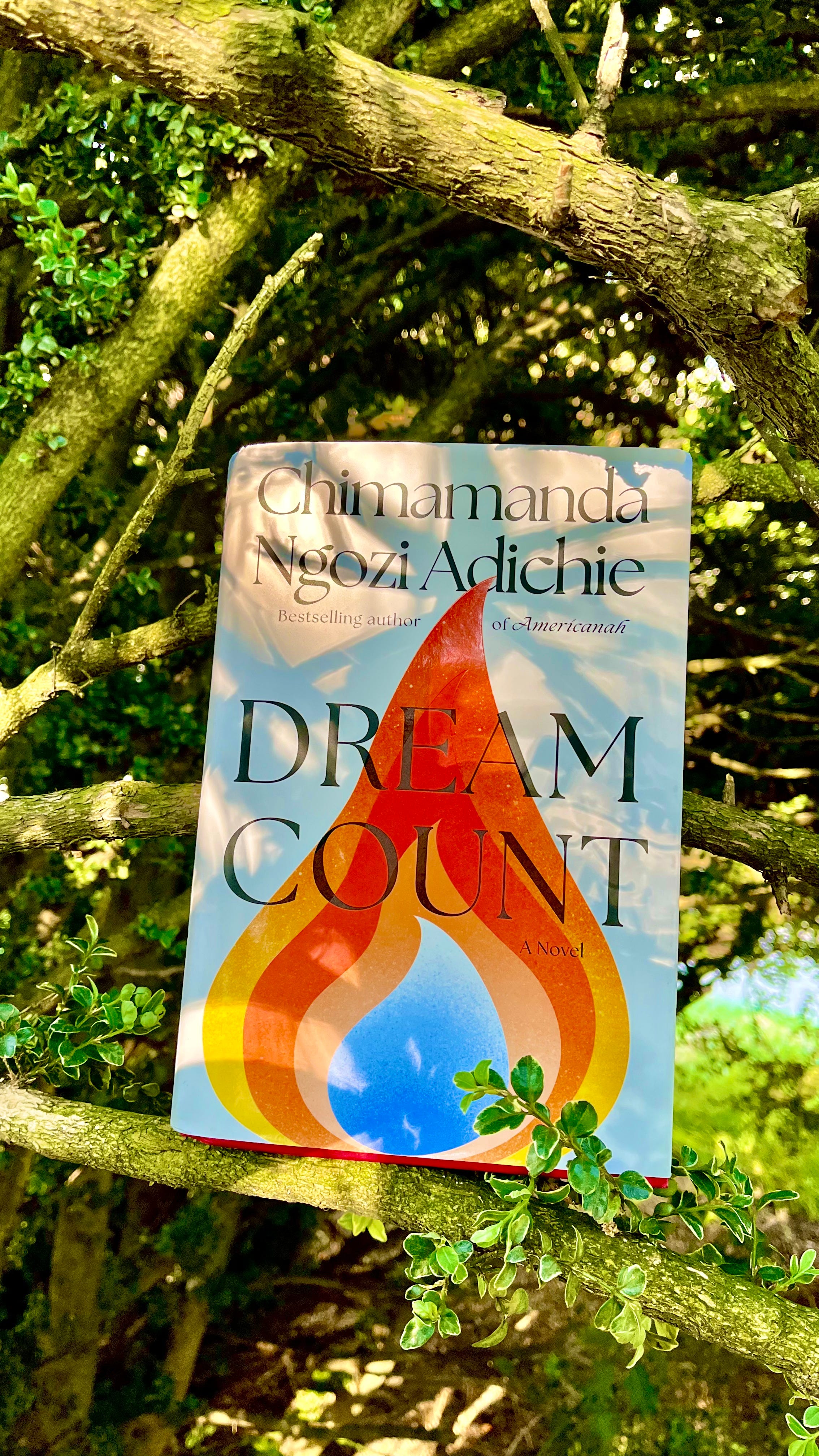
This was an inspiring novel that I couldn’t put down. As the title suggests, Dream Count is an accounting of various wins, losses and dreams of four West African women and the challenges they have overcome in that pursuit. This story was also an autopsy uncovering all the ways in which men have destroyed many of those dreams, if not hindered them. Some events were a little too harrowing for me, which were so raw in their depiction of male violence that I had to put the novel down for those scenes. Readers should approach the novel with discretion as there are graphic depictions of sexual assault.
More than just about men, Dream Count is about camaraderie among women and the power of self love and self discovery as we age.
Have you ever read a fictional story with a character that seemed so real, it’s like a person you knew in real life had been transcribed onto a page and inserted into a story? Well, for the first time in a long time I felt immersed into a story; especially when one of the main characters, Chia, recounted her experiences with men like Darnell and Chuka. They’re equal parts funny and cringey because of how real the experience sounds.
All women have met a Darnell - the man who secretly hates you and envies you, and lets that out in passive aggressive and abusive ways; he’s always a fuse short of an explosion over the most trivial of matters and conversing with him is like walking on eggshells.
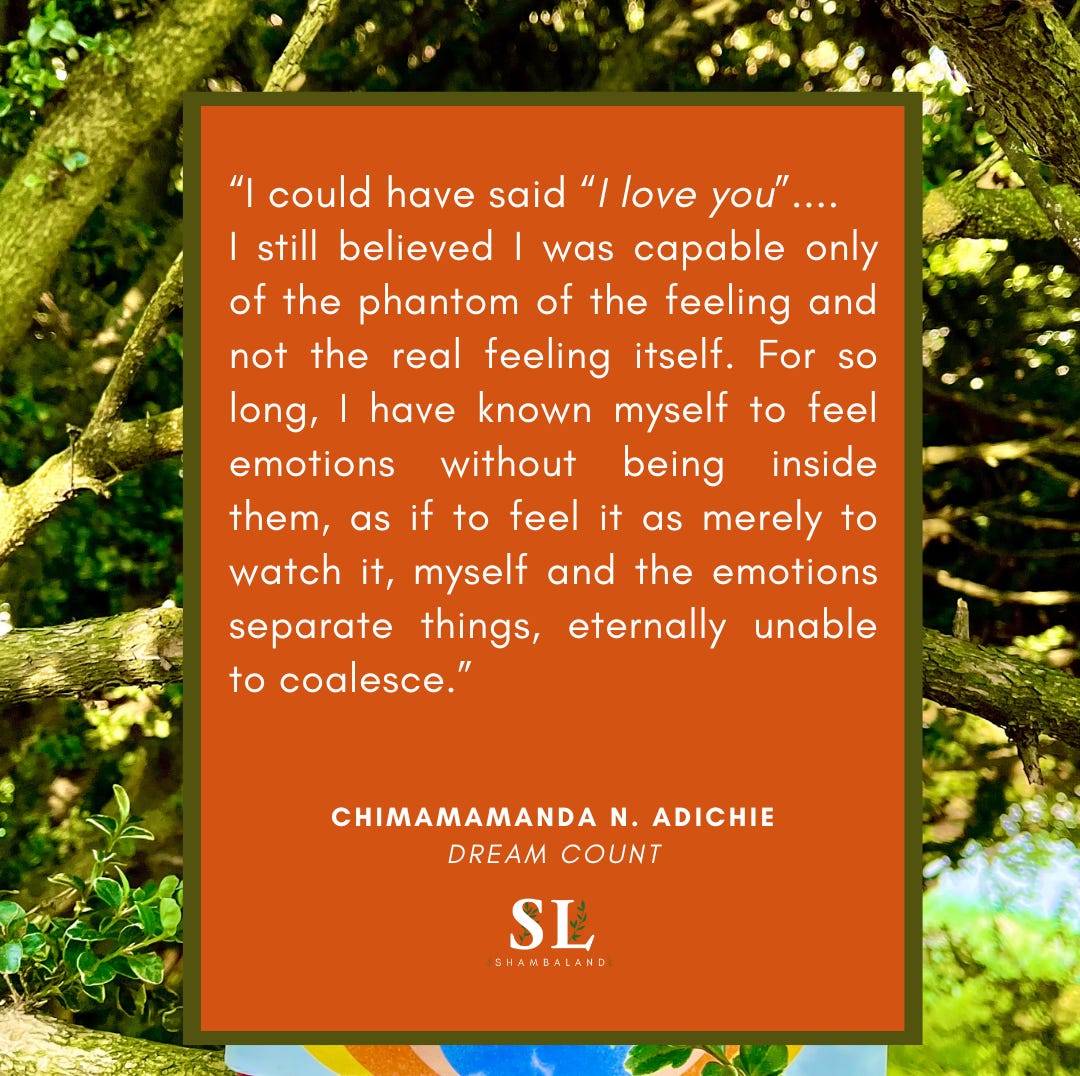
The novel isn’t solely about one woman and her romantic adventures, but also explores the intricate lives of three other women: Zikora, Kadiatou and Omelogor. Women from different economic backgrounds, religions, customs and upbringing. Women who have such contrasting identities yet whose lives are intricately interwoven. Best believe every single time a man comes into the picture, into these women’s lives, they always end up being deterred from whatever dream it is that they had.
Zikora had dreams of motherhood and matrimony but the man she trusted made a different choice. Her character is an intricate case study on how cultural conditioning, especially one with religious undertones, can lead young girls to overprioritize a man for the sake of an ideal. It is in the ruins of her fallen dreams that Zikora looks at her family, and the dreams of her mother, and comes to a profound realization that changes how she sees herself. It turns out she never needed a man after all.
There is Omelogor - the “strong” and self-possessed friend, the effortlessly confident woman who seemingly has it all. She navigate a man’s world with ease and calm that leaves characters like Zikora slowly burning up inside. A sociologist at heart, she runs a Bank that launders corruption while funding ambitious market women on her weekend errands, and all that in addition to running a sex blog that advises men on sex and relationships. She was a morally enticing character. She was blunt, direct and deliciously complex, a character who refused to be liked by the audience. Goodreads reviewers did not find her character appealing at all, while I found her uncompromising character charming in its refusal to be boxed in by convention.
Then there is Kadiatou whose story broke my heart.
Chimamanda Adichie was indeed inspired by a true story for Kadiatou, and addressed this inspiration in detail, citing the urge to give life to an invisible woman whose horrific experience went unacknowledged. In 2011, the head of the IMF and French presidential hopeful, Dominique Strauss-Kahn, was arrested in New York and charged with the brutal sexual assault and rape of a hotel maid. I won’t go in detail about that case, but Chimamanda’s writing definitely accomplished in giving attention to the machinations of power and their deliberate obfuscation of violent crimes against working class women. Nafissatou Diallo, the victim whose story inspired the creation of Kadiatou, is barely mentioned in the media accounts of the case, as the emphasis is solely on the impacts of the allegation on Dominique Strauss Kahn’s reputation. There was no way to read Nafissatou’s and Kadiatou’s stories without being angry. There are thousands of poor, hard working women who endure traumatizing and humiliating violence at the hands of powerful men but become invisible because the world would rather protect power than confront the reality of these powerful men represent: that they are harmful people and by extension their policies, laws and outlook harms everyone, not just the invisible poor.
Lastly there’s Chia, the narrator of the story, who’s dated African Americans, married men, European men, and Nigerian men. None of them made her happy, or at least none of them seemed close enough to fulfil her dream of a grand, consuming love. I don’t think a man could have fulfilled Chia’s dream of love, as she herself hadn’t defined love for herself. It’s easy to consider her character an idealist, but what makes her a great narrator (besides being a writer - an echo to the author), was her love of life and people.
Dream Count felt incredibly intimate; a culmination of lessons, joys and experiences that Chimamanda Ngozi Adichie chose to share in brilliant narrative prose. It definitely felt like a gift from an elder to younger women and I cherish it for arriving at an auspicious time in my life. Books have always had a way of imprinting themselves on me over the course of my emotional and spiritual development, and Dream Count meets me on the eve of my Saturn return in the most synchronous way.